
Conference Speakers
Prof. Soochang Park
Chungbuk National University (CBNU), Korea
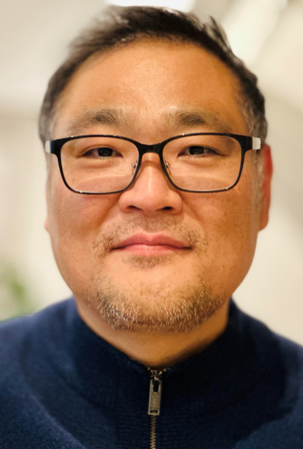
Speech Title: Reliable AIoT-based Virtual Sensing for Macro-to-Micro Scale Seamless Monitoring of Hyper-local Urban Environments
Abstract: Urban resilience against heat islands and extreme weather demands reliable hyper-local environmental data, yet sparse official stations and costly dense IoT deployments fail to deliver sufficient spatial resolution and trustworthiness. To address this, we design an environmental standard model that quantifies surrounding contextual influences on sensing areas and propose an automated recognition method to extract these states from multi-source observations. Building on the standardized representation, an AI-based mapping framework aligns similar environmental conditions across CCTV networks, weather stations, and sparse micro-scale IoT sensors. Cross-modal knowledge distillation and spatial statistical learning then transfer physical knowledge to vision-only models, enabling accurate estimation of both visible and invisible micro-climate variables. The resulting virtual sensors, derived primarily from existing CCTV infrastructure, achieve cost-effective and trustworthy macro-to-micro scale seamless monitoring for urban resilience.
Biodata:
Dr. Soochang Park received his Ph.D. in Computer Engineering from Chungnam National University in 2011. He was a postdoctoral researcher at Rutgers University (2012–2013), a research engineer at Télécom SudParis, France (2013–2015), and a research associate at the Hong Kong University of Science and Technology (2015–2017). He joined Chungbuk National University in 2017 as an Assistant Professor and was promoted to Associate Professor in 2021. At Chungbuk National University, he also served as Head of the Business Incubation Center (2017–2018) and Head of the Department of Computer Engineering (2023–2025). In 2025, he was a Visiting Professor at the University of New South Wales, Australia. Dr. Park was elevated to IEEE Senior Member in October 2025. He currently serves as Vice Chair of the IEEE Consumer Technology Society Technical Committee on Consumer Communications Networks & Connectivity (2025–2026). His career reflects over 13 years of contributions to academic research, leadership, and global collaboration.
Biodata: Dr. Zuqing Zhu received his Ph.D. degree from the Department of Electrical and Computer Engineering, University of California, Davis, in 2007. From 2007 to 2011, he worked in the Service Provider Technology Group of Cisco Systems, San Jose, California, as a Senior Engineer. In January 2011, he joined the University of Science and Technology of China, where he currently is a Full Professor in the School of Information Science and Technology. He has published 390+ papers in peer-reviewed journals and conferences. He is the Steering Committee Chair of the IEEE International Conference on High Performance Switching and Routing (HPSR), and was the Chair of the Technical Committee on Optical Networking (ONTC) in IEEE Communications Society. He is a Fellow of IEEE.
Invite Speakers
Dr. Li-Hsiang Shen
National Central University (NCU), Taiwan
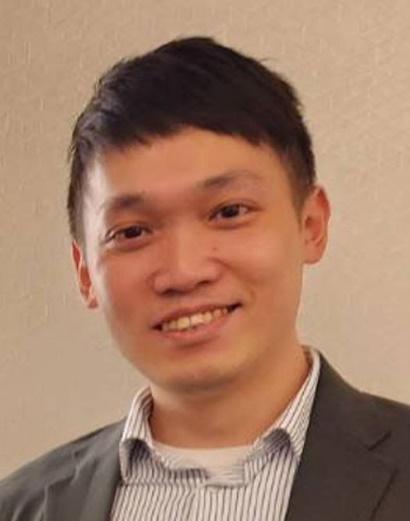
Speech Title: Engineering 6G Wireless Environments: From Intelligent Surfaces to Flexible MIMO and Movable Metasurfaces
Abstract: The emerging paradigm of wireless environment engineering is reshaping future 6G wireless networks. Reconfigurable intelligent surfaces (RIS), fluid antenna/element systems (FAS/FES), and movable antennas/elements (MA/ME) have attracted significant attention due to their ability to manipulate radio propagation, extend coverage, mitigate channel fading, and improve spectral and energy efficiency. By intelligently controlling electromagnetic waves, RIS enables advanced communication and sensing functionalities, while recent developments have further evolved RIS into multi-functional RIS (MF-RIS) architectures, including STAR-RIS, dual STAR-RIS (D-STAR), double-sided STAR-RIS (DS-STAR), and energy-harvesting RIS. These technologies provide seamless 360-degree coverage and bidirectional signal control using a single metasurface. From a practical perspective, RIS deployment has progressed from intelligent deployment on auto-guided vehicles (AGVs) to integration with unmanned aerial vehicles (UAVs) and low-Earth orbit (LEO) satellites, enabling flexible space-air-ground networks. Beyond static surfaces, FAS/FES and MA/ME introduce spatial reconfigurability through dynamic element repositioning and non-uniform array configurations, creating additional spatial diversity and enhanced beamforming capabilities. Their integration with RIS further gives rise to fluid and movable metasurfaces. Looking ahead, six-dimensional movable antennas (6DMA) and six-dimensional movable metasurfaces (6DMM), jointly optimizing 3D position and 3D orientation, offer unprecedented flexibility for wireless environment control. Combined with artificial intelligence (AI) and advanced sensing technologies, these innovations are paving the way toward fully programmable wireless environments, seamlessly integrating communications, sensing, localization, and computing in future 6G networks.
Biodata: Li-Hsiang Shen received Ph.D. degree from the Institute of Communication Engineering, National Chiao Tung University (NCTU), Hsinchu, Taiwan, in 2020. Since February 2024, he has been an Assistant Professor with the Department of Communication Engineering, National Central University (NCU), Taoyuan, Taiwan. From 2018 to 2019, he was a Visiting Scholar with the Next Generation Wireless Research Group of the Department of Electrical and Computer Engineering (ECE), University of Southampton, U.K. From 2021 to 2023, he was a Postdoc with ECE, National Yang Ming Chiao Tung University (NYCU), Hsinchu, Taiwan. In 2023, he was a Visiting Scholar with California PATH, Berkeley DeepDrive, University of California, Berkeley (UCB), USA. In 2025, he was a Visiting Professor with the ECE, University of Toronto, Ontario, Canada. His research interests include wireless broadband in 5G/6G, space-air-ground integrated network (SAGIN), low Earth orbit (LEO), multi-functional reconfigurable intelligent surfaces (RIS), integrated sensing, computing and communications, and machine/deep learning for wireless networks.
Dr. Shen was the recipient of Ph. D Scholarship from NCTU and from Industry-Academic Elite Program. He was rewarded the first prize of Broadcom Foundation Asia Pacific Workshop in 2019. In 2021, he was rewarded IEEE Best PhD Thesis Award, NYCU Outstanding Ph.D. Research, and Phi Tau Phi Scholastic Honor Society of Taiwan. In 2022, he was rewarded National Science and Technology Council (NSTC) FutureTech Award, NSTC Postdoctoral Research Abroad Program, and NSTC Postdoctoral Research Award. In 2024 and 2025, he was rewarded NCU Rising Stars three times. In 2025, he was rewarded Wen-Yuan Pan Foundation Exploration Research Award. In 2026, he received a best paper award in Taiwan Telecommunications Annual Symposium and a best poster award of NSTC project.
